October 12, 2013

Six tips to get your kids excited about homework


Kids don't exactly eagerly anticipate homework, do they? Mom Lisa B. says she butts heads with her 10-year-old daughter nearly every evening about doing the work. "What should I do to get her more interested?" she asks the Circle of Moms community. While turning homework into a positive experience might sound like an insurmountable task, experienced parents say it's possible, with a little time, patience, and ingenuity. Here, we've rounded up six tips from our community to help your child get excited about homework so that she stays on track in school.

1. Designate a Space

Creating an appealing place in which your child can study is always a good place to start. After all, kids are less likely to find homework enjoyable if they feel like they're being punished or banished to their bedroom. But a designated study space stocked with appropriate school supplies and free from TV, radio, and computer game distractions conveys that they need to take their assignments seriously, says Melissa H. With an organized space and school box of supplies at the ready, there is "no excuse or procrastinating while 'looking for a pencil,'" Jennifer L. adds. 

2. Set a Routine

Children should know when they are expected to complete their homework, so they don't lose track of time and wind up staying up all night to finish. "Set aside a specific time each evening that works for your family," Natalie Q. advises. "Once it becomes a natural and habitual part of his day, it won't be such a struggle."

Many parents say they give their kids a snack and have them work on homework right after school while the lessons of the day are still fresh in their minds. "What I have found that works is to let him take a break for an hour when he comes home from school and then let him start his homework. . . . He doesn't give as much trouble now, and he gets it all done by the time dinner is ready," Renee S. says of her son and his homework.

Read on for more homework help.

3. Make Learning Fun

If you want your child to love learning, then find ways to make homework fun. Elizabeth S., for example, reads with silly voices, or dances if her son starts to get frustrated with his homework. "He cracks up when I dance to things, because you know Mom can't dance. [It's] just a good break; to be fun is always good for them."

Suzan M. and Tarina J. have their children racing against time to complete their homework. Suzan sets a timer for 15 minutes and bets her son that he can't complete his homework before the buzzer rings. "He always beats the clock, yet left to his own devices it would take 45 minutes," she says. Similarly, Tarnia pits her son's homework against the time it takes her to complete chores. "Tell him you want him to do as much of his homework as he can before you finish doing the dishes (or some other mundane chore that you'd rather not be doing either)," she says. 

4. Play to His Strengths

When your child is finding a homework assignment particularly challenging, it helps to reframe the problem using his strengths. When her son has writer's block, Aliceon S. bounces ideas off of him with a "what if you wrote about . . . " conversation. "He always comes up with something to write. . . . Once he has his idea, he is fine and eager to get it on paper."

Similarly, Cindy S.'s daughter was having trouble getting her thoughts down on paper and would wind up frustrated — until she discovered she loves to use the video camera. "If she can record her thoughts on the camera then sit down to write it out or type it out with minimal direction from me, it all goes much faster and with a happy heart," Cindy says.  

5. Offer Incentives

Kids young and old frequently appreciate incentives for completing their homework. Moms members suggest stickers for completing homework, an ice cream cone or toy that's being collected, a trip to the park, or some other activity that your child enjoys. "Let him know that the sooner you guys can get homework done, the sooner he may have time for other things before bed and such," Elizabeth S. says. Tammy J. says after "months of frustrating evenings," she made her son a deal that if he completed his homework, she would reward him with a meeting for lunch at school on Fridays. "Now he completes his homework every day, and every Friday I meet him for lunch bringing his favorite foods and then play handball with him and his friends. It's been a win-win situation for us," she says.  

Parents should enlist their child's help in coming up with immediate and long-term ramifications of completing homework, Denise J. recommends. And once you explain what the rewards and consequences are for completing homework, don't lecture and nag, but just follow through, she says.  

6. Create a Study Group

If your child works well in a group setting, then don't be afraid to keep her company, or even invite friends over, as long as they understand that the time is designated for study. Chris M. says her son's school organized homework groups at the end of the school day. "He enjoys the company of others and knows that when he gets home, the rest of the day is his time," she says. Sueha S. says her family designates a time at which everyone does homework together.  

"We find that having a friend come over to do homework together can be helpful," Amy S. says. Even if your child doesn't want or need a companion to help with her homework, you can still use family "together time" to pay your bills. Being available to your child when needed shows that you are interested in her and what she is learning, Crystal W. notes.  


How to Discipline Toddlers When You're Pushed to the Limit


We all know those parents of 2-year-olds who claim they've got the terrible 2s under control and their kid is perfectly disciplined because they have the secret behavioral formula. But for most moms of toddlers, it can be incredibly frustrating trying to keep under control a child who is at an age when he is not exactly a rational human being.

That's why moms like Danielle P. want to know what is reasonable when setting behavior standards for toddlers. She says she's tried and failed at "everything" to try to discipline her "independent, determined, stubborn, and adventurous" 22-month-old daughter. Lisa A. feels similarly frustrated, noting, "Sometimes I feel like I'd get more of a response talking to/disciplining a rock."


So what do you do when you're pushed to the limit and feel like nothing is working with your misbehaving toddler? While there's no one-size-fits-all approach to discipline — some moms maintain a good spanking is the key to disciplining a toddler, while others are adamant about avoiding spanking — many Circle of Moms members agree on the following tried-and-true strategies for helping tots learn good behavior and helping moms not feel so frustrated in the process.


:: Keep reading ::


Stay in Control by Staying Calm


The key to staying in control when your toddler is having a meltdown at the grocery store, say Circle of Moms members, is to try to keep your composure even when your blood is reaching a boiling point. Regina P. says losing control will quickly fuel the situation, so she suggests staying as calm as possible in stressful situations. "Go for the calm . . . Force, threats, and stern tones don't work. A calm voice with explanation gets her to move eventually."


Eve G. agrees, sharing that she works hard to control her temper when her toddler is making her stressed out. "You have to control your hands, violence only breeds violence, what you do to her, and she'll turn around and do to her animals, friends, cousins, and siblings."


Of course, dealing with the stress caused by a toddler's strong will isn't easy. As Regina P. notes: "I've had to learn not to get so frustrated, and that take a lot of time and patience."


Set Clear Expectations and Rules


Many Circle of Moms members advise that you can't expect toddlers to behave in a certain way if you haven't told them what is proper and what is not acceptable. Heidi B. explains: "I like to remember that discipline is about teaching, not hitting. . . . I let my child know what is appropriate. For example, I tell her there is no ball-throwing in the house. If I have to ask her to stop throwing the ball in the house, if she does not stop, I tell her again what she can do, and then what the consequence will be if she continues throwing the ball. I never want discipline to be about hurting her feelings or treating her with disrespect."


Similarly, Lisa A. says using a warning method has helped: "One thing that I have found that works a bit is when he misbehaves I give one warning, telling him if you do that again I am taking away your favorite toy. When he does do it again, I take that toy away. If he continues to do it after that I take ALL of his toys and put them in his room with the door shut."


Be Consistent With Consequences


Order and routine bring predictability to a toddler, which makes them feel safe and they tend to be more behaved and calm, say Circle of Moms members like Missy Long. "This age is all about autonomy," she says. "They have realized that they have an opinion and they want their independence. Consistency is key. Be firm on what your expectations are. Toddlers need to know their boundaries. If they know that breaking rule 'A' always results in action 'A', they won't have reason to test it as much."


Part of being consistent is creating logical consequences, says Kathleen B. "When she potties on the floor, make her help you clean it up," she says. "Once she has to help with the stinky mess, she will probably cease doing it." Teresa D. also believes it is important to be consistent with logical consequences. She too makes her toddlers clean up the mess when they potty on the floor. "They will probably realize it's disgusting enough to quit if they have to clean it. Just closely supervise to prevent bigger mess and then clean them up afterwards," she says.


Reinforce Good Behavior


As important as disciplining a child properly is, moms like Valerie H. are quick to point out that moms also need to reinforce their toddler's good behavior. "Focus on what she is doing right to help that to grow," she says. "When you see anything good name it including: helpfulness, friendliness, cooperation, obedience, kindness, gentleness." She suggests offering up statements like this to your toddler: "I see your friendliness when you smile at Mommy. Or, I like it when you obey me like you just did by coming to the table." The trick is to "name the virtue and how you see it to help your child grow," she adds.


September 19, 2013

Decode your baby's form development of they play


           Childhood is the age of learn begin first step in the eyes and see the world, it is the beginning of the experience of they life. Especial when he grew up during the first year onwards. They are also begun to absorb and learn from the world around them. As well as playing  with his children in the ages which have been developed through play how I want you Mom to come see what we decoded by it.


Mimic and behavior Period
           Children in four months begin to understand the movement of the body by lag in circle. Pedal force and air or rocking around indefinitely began to grow until the child is aged 4-8 months they started training own. When they can sit develop to the skills to move through environment all around. However, it may still swarm behavior batted around as ever and the gradual development of a nascent effort to sit. When they are strong stand and started to walk out. They will also have the opportunity to learn naughty thing was more like that. Time a hand strike the bell hanging chair above theses bell ringing or when pulling the dog tail and cat. These fluffy animals will respond as the reaction of the environment around these here anyway. To teach them to do the same thing repeatedly and mimic the behavior of peers in so parents to buy a toy walker chairs for the kids for the first step Walking. Or buy at Shaker music and a bell to let they play can improve own movement through these fun trinkets player.


 The development of problem solving skills
           Children ages 8-14 months will start to learn how to solve problems. And develop skills through more things all around from learning to move toys. Or turn down the blankets to play picking toys. Section of children older 2-3 years can able to learn something more complicated than that. For example they are observing nanny or mommy even that they find and catch toys for kids. They try to imagination how to get toys like that. They can’t play it right. So we have to see the kid behavior try to open the box. From the moment it is curious that important in the life of a child that has it. Which parents can encourage them to develop skills in solving problems by finding a new toy & can be a buy puzzle toys for children. So they learned how to sort of and developing problem-solving skills on a sort toys unsuccessful.


The Develop to recognize objects
           Although the children have to the skills search and retrieve any objects name ingrained from new born. They will develop and do it very well in the last 14-18 months of growth and begin learn to how objects name ingrained even those that have not seen. In the age of about 14 months parents can play with them and then secretly hide it. Or the name of objects game so they have skills to enjoy this more time.


The Develop to imitate behavior
           Parents have seen the many different development of baby and during the last 18-24 months, it is for children to develop life skills and learn to recognize the logic language skills imagination and empathy for the people around kids. More through imitation of adult behavior and the environment they also learned how gestures and emotions of the people around them. So, in this period, parents should supervise kids closely to explain in what manner. Including the opportunity to spend time with other children about the same age so they have to learn, exchange and interpersonal behavior and practical skills in the use of life with others more.


           The development of baby is important that parents should pay attention and encourage them to practice various skills through to play and pave the way for him to grow up to perfect.


September 18, 2013

Six tips for teaching your young child to listen and focus


1. Get Down to Your Child's Level and Make Eye Contact

Speaking to your child when you can look him right in the eye is the best way to get a toddler's attention, Circle of Moms members suggest. Get down on his level, advises Sarah H. "If you are not already doing so, get down to his level and make him look at you when you are talking to him," she says. "It helps to take away distractions. Otherwise just keep doing what you are doing and follow through with the discipline if he is not obeying or listening.

2. Be Firm, Be Clear, Be Consistent

Don't harp on it, just tell him simply and clearly that you expect him to listen when someone else is talking — at home or at school, suggest Circle of Moms members. "The best thing is consistency," says Jeneva W. "Make sure you, your husband and the daycare/preschool teachers are all on the same page with how you handle his behavior and what he gets time outs for. If there are any differences it will confuse him. Also make sure to point out the positive behavior as much as possible. This is just as important as consistency."

3. Follow Through Quickly

Make it clear to your 3-year-old that you mean what you say by following up immediately with a timeout if he continues to talk or shout over you or someone else he is supposed to be listening to, Circle of Moms members suggest. Being swift to correct  a child will pay off quickly. Says Sarah H. "I do day care and find that at two years, they spend a lot of time in time-out, but by the time they hit three they are having only a few time-outs, and most of the time a warning does just fine."

4. Keep Reinforcing Your Message

Repetition matters, suggest Circle of Moms members. "I have a 2.5 year old and they like to ignore people but I ask him once, ask him again, then count to three," says Diane G. "Most of the time I don't get to three." Pip L. agrees: "One of the things I do to make sure I'm listened to is to make them repeat the instruction I give, sometimes I might even make them say it a few times so we're all on the same page."

5. Model Good Manners and Listening Skills

You can't just talk the talk, you have to walk the walk when it comes to modeling good manners and listening skills for preschoolers. "Modeling manners will go a long way," says Arlene S. "You would be surprised how many preschoolers are not taught them."

6. Remember, It Gets Better

Hang in there even if your child comes home with reports from the teacher that he is jumping all over the place when she is trying to get the class to sit on the mat and listen, advise Circle of Moms members who have been there. "I've got five boys, and the youngest two are two-year-old twins," says Pip L. "All I can say is, it gets better with age"

March 02, 2013

Very high EQ trumps IQ is not that difficult (M & C parent and child).


 IQ (Intellingence Quotient) ability, intelligence or aptitude to learn the EQ (Emotional Quotient), the ability to develop emotionally and socially. It is wise to identify, control and manage their own emotions. In order to address the urgent and serious at making good on the ball IQ and EQ, it is indispensable to me.


Prepared by IQ-EQ.

          Child development were well prepared to learn and understand things quickly, we can use the Antenna to help prepare children.


          Known to help themselves. I know him by his proper self. When he made it to the confidence and pride.


          Known to control mood and looking forward. Do not pay attention to the bad behavior of the children. I have to warn you that the reason for such a behavior. He also praised the assertive.


          Learn from those around you will help your child develop the intellect and mind completely. With the children to take home. Keep questions simple about the storytelling or reading it often.


          It will not have social embarrassment or fear of strangers I meet. Playing with other people. When the old school was taught person. Do not do to others. Sharing. And I was not doing anything. Or known to apologize when wrong.


Strengthen technical IQ-EQ.

          Care, nutrition and variety. The five categories.


          Regular exercise properly. If a child has a specific type of sport. Should promote direct


          To full sleep. Clear skies when the brain is awake. Creativity will follow.


          I do read books, tell stories, do fun things together as a family.


          Relax with music, art, or hang out in places due to the horizons. And cultivating the imagination for children.


          The ability of the reality. Do not expect too much with the ball. Become a coercive pressures. Their children to do what is beyond their capacity and improve with age.


          Parenting with Love. I always hold him in the warm feeling complacent.


Need to measure IQ-EQ or not?

          I do not know. Because most children with IQ measures. Child is suspected of having cognitive problems. In fact. We can estimate the IQ of the children themselves. The persistent observation of the reaction was what prompted us to see if he will respond to the emotional kind. The result will be more accurate than the intelligence test again.


January 27, 2013

How to make a play dough with soft toys for baby.


          For mothers who are looking for soft toys that are safe, clean, and had little to play for mixed development training, then this bowl dot com has brought to you a recipe for the dough peopleparadise. Additional shower room. Thousands dot com website. Has made a generous way I can guarantee that the recipe is easy to follow and also economically. First we went to see the equipment needed to do a better dough before it.


Equipment


        1.) 3 cup all-purpose flour.

        2.) Cream. Offline tartar 4 tablespoons or 1/4 cup.

        3.) 1 cup salt.

        4.) 2.5 cups of water (2 cups half).

        5.) 2 tablespoons vegetable oil.

        6.) 6 colors.

        7.) Flavor mixing.


How do
      

1. The flour. Senior cream of tartar, salt, water and oil together in a container and pour grip. Then all the ingredients together. Until it becomes a liquid.

2. Bring the container to the fire. By adjusting the power to the light. Then stir the mixture continuously without a break for 20 minutes at this stage. If using a Teflon pan with a trough in the middle. The dough will not stick to the pan with it.

3. Powder on the viscosity. To turn back the dough. Flour and blend thoroughly heated. Until the dough begins coagulation.         

4. Starch to change the color of white. As a light brown powder cooked. Place in a serving container. To let the sweltering heat in the dough. The flour is cooked a bit more. Which at this stage. Do not let the wind decided otherwise flour dough may be frozen and broken.

5. Starch to form view. If the dough does not stick to the subject matter. Then divide the dough into 3 pieces to fit.


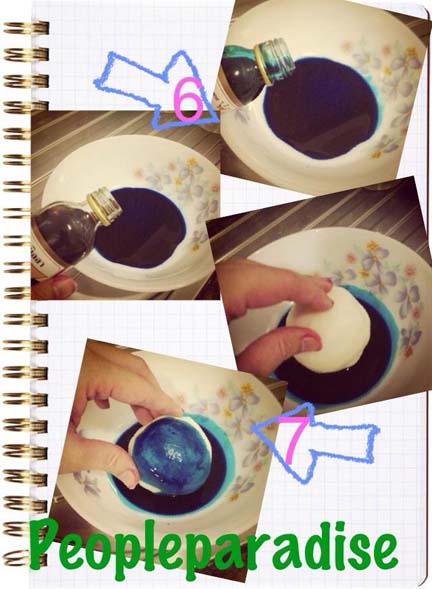
6. Prepare food coloring about 1 tablespoon of food coloring, if using dry, put 2-3 drops of water to make a difference to people. And then drops down to smell like.

7. Starch to dip the pieces individually. Then massage the mixture into a powder. Which at this stage. If you use the drops. Down and smell the powder directly. The dough will not fail. And soft too. But if you want to use color should I dip it in water.
       
8. Mix the powder massage. How to massage and push the dough away from you. Using a hand-holding. Flour and knead the meat flat. The color will not soak into the dough. Or massage it on the tray. Depending on the color.                                                                 
            
9. Done. The storage box. Closed tightly. And to extend the life of the dough. Should wash their hands thoroughly before playing. To prevent accumulation of bacteria. When finished playing. The dough should be refrigerated. If the carpet powder 2-3 drops of water and knead again. The dough will be soft like the original.

For more tips on how to do it using flour dough is not too old. If an old flour. Powder is not smooth. Players may feel uncomfortable hand. But if the new flour. I should not be mixed. The dough may be too liquid. The cream of tartar is offline. Many people may not be familiar with this material quite princely. The Senior cream of tartar baking ingredients in the bakery. You can buy the raw materials for pastry shops. Or the supermarket are the cream of tartar is offline life is to keep the dough longer there.

For mothers who do not have time. I will try and do a little play with herself. How to make a dough that is easy to enjoy. And makes it less fun to play with it safely.


January 26, 2013

To clear the mucus for children.


           The children have a cold. A major result in respiratory function is not a child or adult blow it out enough to know how to survive. Children, but he did not blow my own. You can rely on me to help clear mucus.

Mucus coming from.

           Secretions of mucus in our noses. Which is secreted from the skin on your nose. Normally mucus is clear and the volume is more or less depending on what the skin such as irritation, even assuming that during a cold. The secretion of these substances are very The mucus is usually clear. But if there is irritation in the nose. Or bacteria into the body. The white blood cells to fight infection. And when white blood cells to die. The color of the mucus turns yellow. Color yellow-green or green or brown enough.

Clear mucus.

        Suction with a rubber ball. Washed with brine.

        Supplies water to absorb a small rubber ball. Small size rink.

 How to.
           The children sleep in the supine position. The neck is a little high. To prevent aspiration during suction mucus. The size rink suck up water and then gradually drops 2-3 drops 3-5 drops in each nostril, wait for the water to wash the sticky for some time. Then squeeze the air out of the tires. And inserted into the nostril. And let the wind blow out of the vacuum tube. Then put the tire in the bath water. Compressed air to clean out. Then do it again. After moving back to the other side.

Concern.
           Before draining the nose this way. The cloth should be wrapped before. I struggled to keep the device off when the hand vacuum. If you are not qualified should find someone to help you, although some people will be very good.

           Saline drops should not be left without a nose or wipe the rubber suction mucus out. I blow dry and clogged sinuses to swell. Choke even more convenient.

Cotton wrapped wood handle.  
            
            Small wooden device wrapped cotton saline.

 How to.
           This method is suitable for children who are not quite snot. Or during a cold start. You can cut the wood or cotton billion at the end of treatment. Dipped into the water. Then to wipe the snot nose poked into the hole it was before. Or some mucus out.

Concern.
           Use a small cotton wool wrapped sticks. And should be changed every time it is used to wipe your nose. Be careful not to probe too deeply into. If the baby is pushing. You may make it difficult to control. The risk of perforation into the sinus mucosa of children. May be made when the child sleeps here. Do not make me gently.

Suction equipment.

           This will relieve your parents have it. Currently producing for a suction mucus automatically. And salt water spray into the nose. The mucus will gradually flow out like that.

Vacuum tube type mucus.

 How to.
           The use of this device to suck mucus from the child. Relies on the relative timing of both mother and child. The mother must be attached to the vacuum bottle comes second to the first nostril. Meanwhile, the mother gently suction force at the end of the hose to the bottle. To make it runny. The mucus will be sucked out by the bottle. Easy to see. And clean without flowing back into the tube again.

Automatic vacuum nose.

 How to.
           This device makes it easy for you to do it. I referred to is designed to operate automatically. Just bring it to his mother at the nostril. And press work. Within a few seconds, it will suck the snot out of a balloon that is intended for the nose. With proper suction and not harmful to the nose as well.

Concern.
           If the mucus becomes dry chunk of ice. Drops of saline into the nostril to the second side and then blow out the vacuum. The tools of all kinds need to be paired with saline only.

Mom sucking mouth.

 How to.
           How old is also available for all ages is actually sucking the snot out of each side of the nose similar to a tube, which you can control it manually. Bgwn then blow out there.

Concern.
           You should clean the mouth of the well. Because it may be vulnerable to infection.


Suction mucus safely.

          I suggest that you dig yourself into a hole in the nose of the ball. Because you are bigger than an inch of my nose then. A sharp finger nails and dirt behind. Which is very harmful to children.
  • Vacuum or wash hands before his nose for the ball.
  • The freshly breastfeeding should not absorb or clear mucus. It may cause vomiting or     choking child.
  • If vomiting or choking while sucking. Children prone to the lower head, pat on the back light so that vomit does not aspirated into the lungs.
  • The saline solution should be used only by clearing the nose. Should not be mixed with water, not salt water. And to pour saline solution in a reasonable amount to use. If not you should not be poured back into the bottle, let them be good.